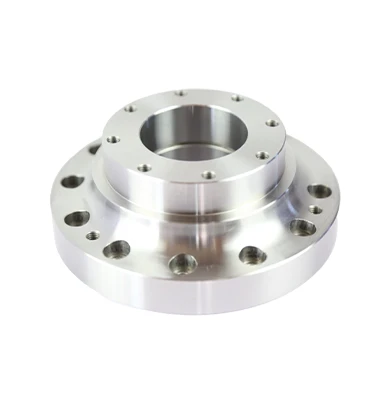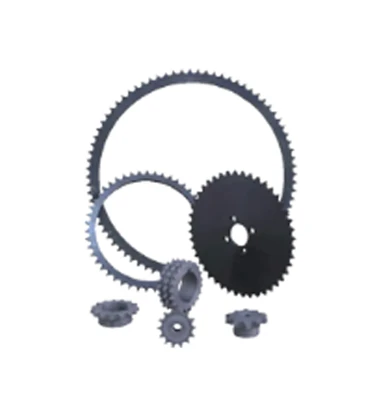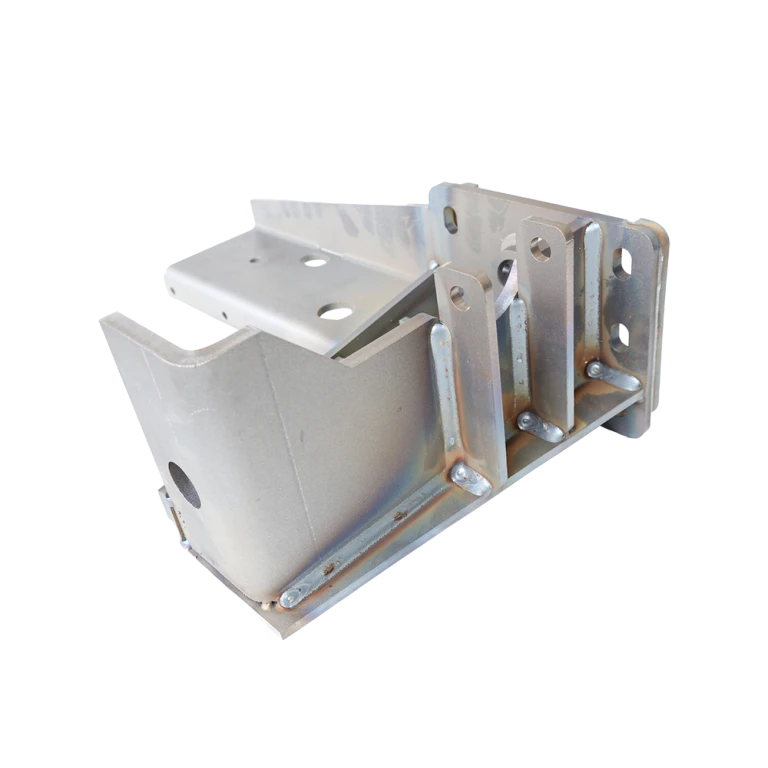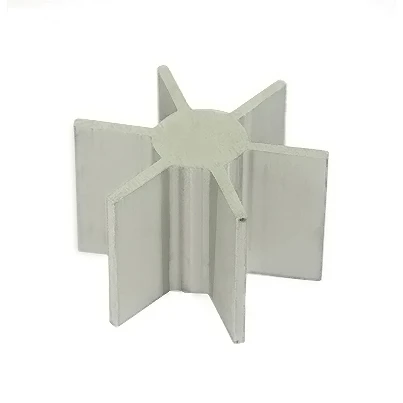








Gieten is een productieproces waarbij gesmolten metaal in een matrijsholte wordt gegoten, waar het bij afkoeling stolt en specifieke componenten vormt. Deze technologie is met name geschikt voor de productie van onderdelen die sterkte, duurzaamheid en complexe geometrieën vereisen, met typische toepassingen zoals motorblokken, hydraulische pompbehuizingen, industriële kleppen, behuizingen van apparatuur en zware machineonderdelen.
Onze uitgebreide gietdiensten omvatten de volgende materialen:
Gietijzer: Grijs gietijzer (HT200, HT250, HT300), nodulair gietijzer (QT500-7, QT400-15, QT600-3), gelegeerd grijs gietijzer (HTMBCuCr-250)
Gegoten aluminium: Aluminiumlegeringen (ZL101, ZL104, ZL110 enz.)
Gegoten staal: Koolstofstaal (ZG200-400, ZG230-450, ZG270-500, enz.) Gelegeerd staal (G20Mn5, ZG20CrMo, ZG42CrMo, GS-18NiMoCr3, ZG15CrMo, ZG40Cr, enz.) Hooggelegeerd staal (GX120Mn12)
Roestvrijstalen gietstukken: Austenitisch roestvast staal (06Cr19Ni10, 0Cr17Ni12Mo2 enz.)
Gietstukken van koperlegeringen: ZCuSn10P1, ZCuPb10Sn10, ZCuAl8Mn13Fe3, ZCuZn38, ZCuNi10Fe1Mn1, Qbe0.3-1.5, enz.
Verschillende materialen vertonen unieke eigenschappen die zijn afgestemd op specifieke scenario's:
Bijvoorbeeld, Nodulair gietijzer:Het staat bekend om zijn superieure mechanische prestaties en wordt veel gebruikt in zware versnellingsbakken, krukassen en andere aandrijflijncomponenten. Aluminiumlegeringen:Ze worden gewaardeerd om hun lichte gewicht, corrosiebestendigheid en uitstekende thermische geleidbaarheid en worden veel toegepast in de lucht- en ruimtevaart- en auto-industrie. Austenitisch roestvrij staal: Biedt een uitzonderlijke corrosiebestendigheid, waardoor het ideaal is voor chemische verwerkingsapparatuur en componenten in maritieme omgevingen.
Verschillende gietprocessen om aan uiteenlopende behoeften te voldoen:
Bijvoorbeeld, Zandgieten: Maakt gebruik van zandvormen, geschikt voor het gieten van één stuk, kleine series of grote hoeveelheden. Gieten van metalen mallen: Maakt gebruik van duurzame metalen mallen met een langere levensduur, ideaal voor massaal geproduceerde componenten. Drukgieten: Hogedrukspuitgieten en lagedrukgieten, geoptimaliseerd voor onderdelen van aluminiumlegering. Precisiegieten (bijv. verlorenwasgieten): produceert complexe onderdelen met een hoge oppervlakteafwerking en maatnauwkeurigheid. Verloren schuimgieten: Maakt gebruik van schuimpatronen om grootschalige, ingewikkeld gestructureerde gietstukken te maken. Centrifugaal gieten: Een gietmethode waarbij gebruik wordt gemaakt van mallen en centrifugale kracht om holle of buisvormige gietstukken te produceren. Dit proces is met name geschikt voor de productie van cilindrische of ringvormige onderdelen, zoals pijpen, cilinderbussen, bussen en ringvormige constructie-elementen. De centrifugale kracht zorgt voor een gelijkmatige materiaalverdeling en verbeterde metallurgische eigenschappen in het eindproduct.3D-printen: Maakt snelle prototyping en maatwerk in kleine series mogelijk.
Kwaliteitsborgingssystemen:
Materiaalal Testen: Uitgerust met spectrometers, trekbanken, hardheidsmeters en snelle analysatoren voor in de oven. Dimensionale controle: Maakt gebruik van nauwkeurige meetinstrumenten, meters en geavanceerde inspectieapparatuur. NabewerkingOppervlaktebehandelingen: spuitverven, poedercoaten, enz. Warmtebehandelingen: blussen, temperen en andere processen om de mechanische eigenschappen te verbeteren.
Geïntegreerde productiediensten:
Wij bieden complete oplossingen, van gietwerk tot eindproduct, inclusief precisiebewerking, assemblage en nabewerking op maat. Hebei Windzone streeft ernaar hoogwaardige, hoogwaardige gietstukken te leveren die voldoen aan of de verwachtingen van de klant overtreffen.
Neem gerust contact met ons op voor gedetailleerde productinformatie of technische besprekingen. We stellen uw vragen graag op prijs om samenwerkingsmogelijkheden te verkennen.
Gietijzeren producten


Gegoten staalproducten


Gegoten roestvrijstalen producten


Gegoten aluminiumproducten


Gegoten koperproducten


" border="0" width="947" height="710" />
What are casting parts?
Casting parts are components produced by pouring molten material, usually metal or plastic, into a mold where it solidifies into a specific shape. This manufacturing process, known as casting, is one of the oldest and most widely used methods for creating complex shapes and parts with high precision. Casting allows the production of components that would be difficult, expensive, or even impossible to make using other manufacturing methods such as machining or forging.
The main materials used for casting parts are metals like iron, steel, aluminum, copper, and their alloys, as well as polymers and resins for plastic parts. Each material has its own properties, which determine the performance, strength, and application of the final part. For example, aluminum castings are lightweight and corrosion-resistant, making them ideal for automotive and aerospace applications, while steel castings offer high strength for heavy machinery and structural components.
The casting process begins with the creation of a mold, which defines the shape of the part. There are various casting methods, including sand casting, die casting, investment casting, and centrifugal casting. Sand casting is widely used for large and complex shapes, while die casting is suitable for high-volume production with excellent surface finish and dimensional accuracy. Investment casting, also called lost-wax casting, is used to create intricate and precise components. Centrifugal casting is often applied for cylindrical parts such as pipes and bearings.
Casting parts are valued for their ability to produce complex geometries with internal cavities, thin walls, and intricate details that may be difficult to achieve with other methods. They also reduce material waste, as excess material can often be reused. After casting, parts may undergo finishing processes such as machining, heat treatment, polishing, or coating to meet specific quality and performance requirements.
In modern industry, casting parts are used across a wide range of sectors, including automotive, aerospace, construction, electronics, and energy. From engine blocks and turbine blades to pump housings and decorative items, casting provides the versatility and efficiency needed to manufacture both functional and aesthetic components. Its combination of flexibility, cost-effectiveness, and precision makes casting an essential technique in manufacturing.
Difference Between Cast Iron and Cast Steel
Cast iron and cast steel are both widely used ferrous materials produced through casting, but they differ significantly in composition, properties, and applications. Understanding these differences is essential for selecting the right material for engineering and manufacturing purposes.
Composition is one of the main distinctions. Cast iron contains a higher carbon content, typically between 2% and 4%, along with silicon and trace elements. This high carbon content gives cast iron its characteristic hardness and brittleness. Cast steel, on the other hand, contains much less carbon, usually between 0.1% and 1.5%, along with other alloying elements such as manganese, nickel, or chromium. The lower carbon content makes cast steel tougher and more ductile than cast iron.
Mechanical properties also differ. Cast iron is hard, wear-resistant, and has excellent compressive strength, but it is relatively brittle and weak in tension or impact. This makes it suitable for parts where rigidity and wear resistance are important, such as engine blocks, pipes, and machinery bases. Cast steel is stronger in tension, tougher, and less brittle, which allows it to withstand shocks and heavy loads. It is commonly used in structural components, gears, crankshafts, and pressure vessels.
Casting characteristics vary as well. Cast iron melts at a lower temperature than cast steel, making it easier and less expensive to cast. It also solidifies with minimal shrinkage and can reproduce fine details, which is why sand casting is frequently used for cast iron parts. Cast steel requires higher temperatures, and controlling shrinkage and defects is more challenging, often requiring more precise molds and controlled cooling processes.
Applications are determined by these differences. Cast iron is ideal for components where rigidity, vibration damping, and wear resistance are critical, such as engine blocks, brake drums, and pipes. Cast steel is chosen for parts requiring high strength, toughness, and durability under stress, including pressure vessels, structural beams, and heavy-duty machinery parts.
In summary, while both cast iron and cast steel are produced through casting, cast iron is carbon-rich, brittle, and ideal for wear-resistant components, whereas cast steel is stronger, tougher, and suitable for high-stress applications. Selecting between them depends on the mechanical requirements, cost, and intended use of the component.
What are steel castings used for?
Uses of Steel Castings
Automotive Industry
Steel castings are used in engine components, transmission parts, crankshafts, gears, and suspension parts. Their high strength and fatigue resistance make them ideal for parts that experience constant stress and wear.
Aerospace Industry
Steel castings are used in aircraft landing gears, turbine shafts, structural supports, and engine parts. The toughness and reliability of steel ensure safety in high-stress and high-temperature environments.
Construction and Infrastructure
Steel castings are employed in bridges, heavy machinery, cranes, and structural components. Their ability to bear heavy loads and resist impact makes them suitable for critical infrastructure.
Energy Sector
In power generation, steel castings are used for turbine housings, valves, pump components, and nuclear reactor parts. They can withstand high pressure, temperature, and corrosive conditions.
Mining and Industrial Machinery
Steel castings are used for crusher parts, gears, rollers, and other heavy-duty machinery components. They offer wear resistance, impact resistance, and durability, which are essential in harsh industrial environments.
Marine Applications
Marine engines, propeller shafts, and other structural parts are often made of steel castings due to their strength and resistance to fatigue in fluctuating loads and marine conditions.
Steel castings are preferred when high strength, toughness, fatigue resistance, and durability are required. They are widely used in automotive, aerospace, energy, construction, mining, and marine applications. By enabling complex shapes and reducing machining needs, steel casting combines efficiency with performance, making it a cornerstone of modern manufacturing.